Path | Key Sites
Oyster Beds
Oyster Beds
The oyster beds “hayrat” in the northern waters of Bahrain are renowned for the quality and abundance of their natural pearls. They were a principal destination for pearling fleets during the diving seasons, as boats arrived from across the Arabian Gulf, reinforcing their status among the most important pearl oyster beds in the region. The Pearling Path includes three principal hayrat: Hayr Shtayyah, Hayr Bu ‘Amamah, and Hayr Bu-I-Thamah. Known for producing high-quality pearls, they are today protected areas that preserve their ecological diversity and stand as a testament to Bahrain’s maritime history and enduring pearling heritage.
Bu Mahir Seashore
Bu Mahir Seashore
The seashore played a central role in the pearling economy, serving as the departure and return point for pearling boats. It also welcomed merchants, visitors, and diplomatic missions, and functioned as a landing point for goods arriving from ports across the Arabian Gulf, India, and East Africa. Bu Mahir Seashore, at the southern tip of Muharraq Island, is the only remaining original coastline on the island, where the departure and return of the pearling fleet were celebrated, shaping Muharraq’s social identity during the pearling era.
Qal’at Bu Mahir
Qal’at Bu Mahir
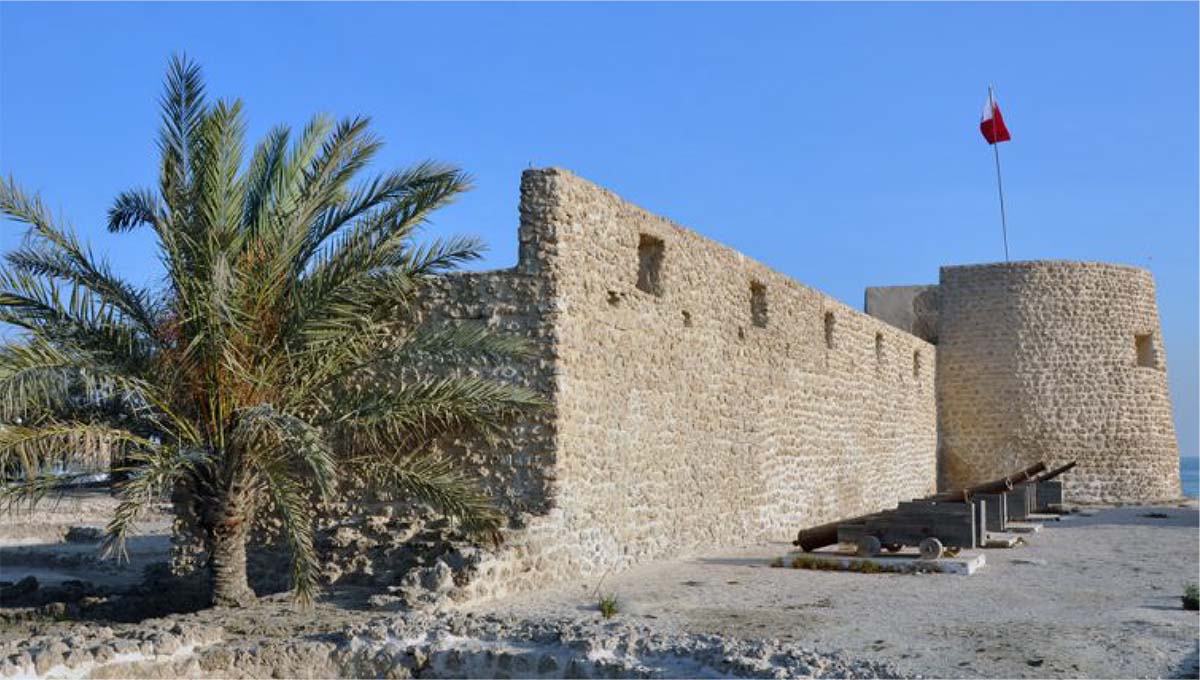
Qal’at Bu Mahir first appeared on a map dating to 1635 and comprised four towers enclosed by defensive walls along the seashore. It protected the city of Muharraq and the waters separating it from the island of Bahrain, while safeguarding the pearling fleet from pirates. Its defensive role declined in 1868 after much of it was destroyed; however, the site remained important for observing the departure and return of pearling fleets. Today, only the southern tower and part of the adjoining defensive wall remain, while excavations have revealed traces of its towers and foundations.
Bu Mahir Visitor’s Centre
Bu Mahir Visitor’s Centre features an introductory exhibition on the Pearling Path, offering a comprehensive overview of its sites inscribed on the UNESCO World Heritage List. It includes scale models of the pearl oyster beds and architectural components, alongside information on the history of the path and its importance in shaping Bahrain’s identity during the pearling economy. The centre serves as a starting point for exploring the path before proceeding to its remaining stations.
Al Ghus House
Al Ghus House
Al Ghus House dates to the early twentieth century and served as a residence for those working on pearling vessels. It stands near the seafront, overlooking the channel once crossed by sailors to reach Qal’at Bu Mahir during low tide. The house includes an exhibition exploring the work of the diver and the lives of sailors at sea, evoking the height of the pearling economy, when activity extended between the shore and the centre of Muharraq.
Badr Ghulum & Turabi Houses
Badr Ghulum and Turabi Houses
Badr Ghulum House is among the oldest buildings associated with healthcare in Muharraq. Badr Ghulum Suleiman, a barber and practitioner of traditional medicine, began working there in 1912, receiving patients from across society, including many pearl divers. The house still retains its treatment room for preparing herbal and mineral substances, and its internal courtyard includes a garden with local plants and trees.
Al Jalahma House
Al Jalahma House
Al Jalahma House stands at the northernmost edge of Halat Bu Mahir and was built before the land reclamation works that later altered the area’s landscape. It represents a model of large pearling-era residences and highlights the role of women in pearling society, as they formed the majority of its residents. Its architecture reflects a clear emphasis on women’s privacy in line with prevailing customs, through the organisation of corridors, courtyards, and reception spaces, as well as the first-floor room known as the “Hafiz,” one of its most distinctive features.
Al Alawi House
Al Alawi House
Al Alawi House represents residences linked to the supply trade supporting the pearling industry. It is the only house in the area to retain its wind tower “badgir” and its original function, apart from that at Isa Al Kabeer Palace. Built in the early 1930s on reclaimed land between Muharraq and Al Hala, it was constructed by Mahmood Al Alawi, a merchant who supplied pearling vessels with essential materials during the diving season. Today, it displays artefacts reflecting the family’s commercial legacy and its role in supporting the pearling economy.
Fakhro House
Fakhro House
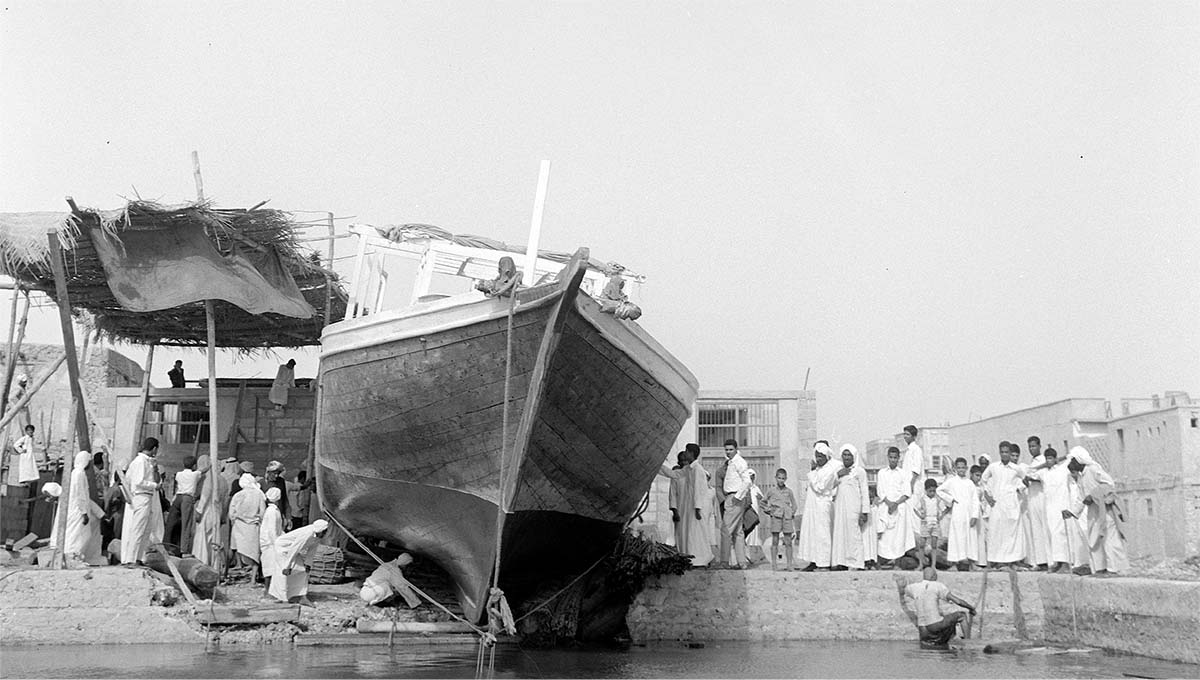
Fakhro House is one of the most prominent pearl merchant residences in Muharraq and was the home of Yousif Abdulrahman Fakhro, a timber and boatbuilding materials merchant during the pearling era. Its scale and architecture reflect the family’s status, and it expanded as the city grew towards the sea. Yousif Fakhro owned a fleet of around fifty vessels and built a private pier beside the house to oversee their movement. Today, it features exhibitions highlighting boatbuilding, the family’s role in trade, and transformations following the decline of the pearling economy.
Murad House - The Celestial Hotel
Murad House is located in one of the narrow alleyways of old Muharraq and stood a short distance from the seashore before the area’s landscape changed. It was built in the late nineteenth century and is distinguished by a spacious internal courtyard surrounded by ground-floor rooms, as well as upper-level balconies that once overlooked the sea.
Today, the house is home to The Celestial Hotel, which offers an accommodation experience rooted in a calm design inspired by the spirit of the place, combining genuine hospitality with the preservation of its historic architectural details. The hotel includes a refined dining space and a café with a quieter atmosphere, extending the memory and social function of the house into a contemporary setting.
Murad Majlis
Murad Majlis
Murad Majlis stands opposite the family house and was built as an independent space for receiving guests. It served as a place for displaying pearls, concluding commercial transactions, and accommodating overnight visitors. The majlis is distinguished by the simplicity of its architectural and decorative details and represents a pearl merchant’s majlis within the city during the pearling era. It remains in use by the family today, maintaining its social role within the city’s historic setting.
Siyadi Shops
Siyadi Shops
Siyadi Shops comprise a group of historic commercial units in Muharraq’s old market, forming part of its commercial fabric and its heritage linked to the pearling economy. Built in the mid-nineteenth century, these shops and warehouses have remained in use across generations. They played an important role in supplying merchants with essential goods such as dates, rice, sugar, tea, and coffee, which formed part of the market’s daily activity.
Pearling Path Visitor & Experience Centre
Pearling Path Visitor and Experience Centre
The Visitor Centre is located in the heart of Muharraq, within the historic buildings of the old market, and was built on the site of Amarat Yousif A. Fakhro, as well as Amarat Al Doy and its later expansion. It is designed as a single-roof structure with fifteen ventilation towers and houses an exhibition presenting the history of pearls and the profession of diving across the ages. The centre also includes exhibition spaces, areas for children and workshops, and a conference hall.
Amarat Yousif A. Fakhro
Amarat Yousif A. Fakhro is one of the historic commercial buildings in Muharraq’s old market and once overlooked the seafront, giving it a strategic position within the city’s trading activity. The building served as an important point for importing timber used in boatbuilding. It also includes historic date presses, reflecting the diversity of commercial activities during that period. The remaining parts stand as a testament to the prosperity of the pearling trade and the economic transformations that followed in Muharraq.
Amarat Ali Rashed Fakhro (I) &(II)
Amarat Ali Rashed Fakhro (I) and (II)
Amarat Ali Rashed Fakhro (I) and (II) are prominent examples of historic commercial buildings in Muharraq’s old market, managed by the Fakhro family since the late nineteenth century. The first consists of a shop and warehouse, with two entrances from the market and the seafront, reflecting its link to trade between land and sea. The second is among the best-preserved buildings in the old market and remains in use as a warehouse, maintaining its traditional function.
Nukhidhah House
Nukhidhah House
Nukhidhah House, built in the 1920s, originally functioned as the private majlis of the boat captain Jassim Ajaj. It was designated for receiving sailors arriving from outside Bahrain during the main pearling season and includes rooms prepared for this purpose. The building stands a few metres from the family residence, separated by a narrow passage, and was constructed independently to preserve the family’s privacy in accordance with prevailing customs at the time.
Siyadi House
Siyadi House
Siyadi House is one of the most prominent historic houses in Muharraq, built in 1931 as the family’s main residence. It reflects the standing of the Siyadi family and their role in the pearl trade and forms an integral part of the old city’s urban fabric. The house is distinguished by its architectural details and decorative elements, reflecting the prosperity of the pearling economy. It remains inhabited today by the descendants of the original builder, maintaining its presence within Muharraq’s historic setting.
Siyadi Mosque
Siyadi Mosque
Siyadi Mosque is one of the oldest mosques in Muharraq. Built in 1865 and renovated in 1910, it is characterised by a simple single-storey structure with a spacious courtyard and a conical minaret that remains in use today. During the height of the pearling economy, it served as a place of worship and gathering for the people of Muharraq. It continues to stand as a testament to the presence of faith in daily life at the time and to the contributions of pearl merchants in supporting the local community.
Pearl Museum - Siyadi Majlis
The Pearl Museum presents the history of pearl diving in Bahrain across the ages and features some of the oldest perforated pearls and pearl jewellery discovered in Bahrain, dating to the Dilmun and Tylos periods from the Bahrain National Museum collection, alongside selected local and international jewellery crafted from Bahraini pearls. The museum adjoins the historic Siyadi Majlis, one of Muharraq’s most beautiful buildings, known for its intricate decoration and distinctive design. It is the only four-level structure from the pearling era and once served to receive pearl merchants travelling to Bahrain to conclude trade agreements.